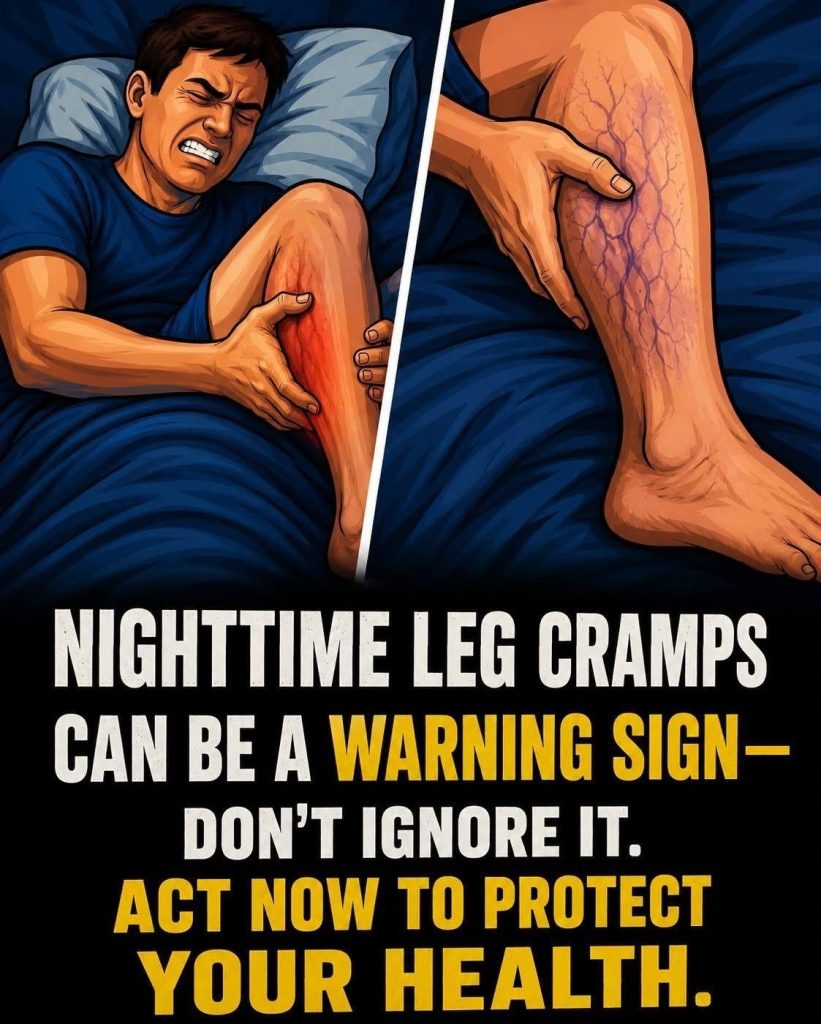

Nighttime leg cramps are sudden, painful muscle contractions that often affect the calves, feet, or thighs. While they are usually harmless, frequent cramps can sometimes signal an underlying problem.
Common Causes
- Dehydration — Lack of fluids may contribute to muscle spasms.
- Electrolyte imbalance — Low levels of potassium, magnesium, calcium, or sodium can affect muscle function.
- Muscle fatigue — Intense exercise, prolonged standing, or sitting may trigger cramps.
- Medications — Some blood pressure, cholesterol, and diuretic medicines can cause cramping.
- Health conditions — Diabetes, thyroid problems, kidney disease, circulation issues, and nerve problems may increase the risk.
- Aging — Muscle loss and reduced flexibility can make cramps more common.
How to Reduce Cramps
- Stay well hydrated.
- Stretch your calves and legs before bed.
- Exercise regularly without suddenly increasing intensity.
- Warm up before workouts and cool down afterward.
- Gently massage and stretch the muscle when a cramp occurs.
- Maintain a balanced diet with essential minerals.
When to See a Doctor
Seek medical advice if cramps are frequent, severe, persistent, or disrupting your sleep, especially if they occur with swelling, redness, numbness, weakness, or severe pain.
Most nighttime leg cramps are manageable, but recurring episodes shouldn’t always be ignored.